
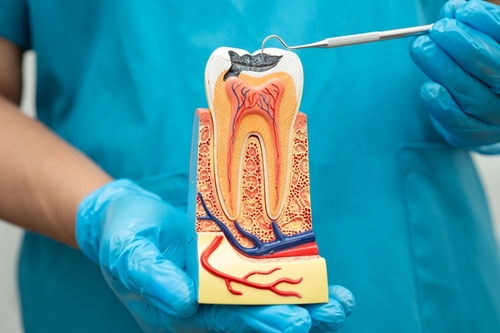
Most people don’t decide they want a root canal. They decide they’ve heard enough reasons to avoid one. Maybe they remember a story from a family member. Maybe they were told the procedure is painful. Or maybe they waited so long that the idea of treatment now feels bigger than the toothache itself. Some of the hardest root canal conversations start before the patient ever sits in the chair. By the time they arrive, they have already heard that extraction is easier, that waiting a little longer will not matter, or that a root canal is something to fear. Those ideas can shape the decision before we even have a chance to look at the tooth. Root canal pain relief starts with understanding what is actually causing the pain. In many cases, the problem is not the procedure. It is the infection or inflammation inside the tooth. Once we treat that source, we can often relieve discomfort and preserve the natural tooth.
1. Root Canals Cause Pain
In most cases, the pain starts before the root canal, not because of it.
The misconception that root canals cause pain usually stems from outdated stories or the fear people associate with the name. Some would say that the idea around root canals has reached a mythological status. But a better way to think about it is this: root canals do not cause the toothache. They treat the toothache.
Today, root canal treatment is very different from what many people picture. With local anesthesia and modern techniques, the procedure is typically much more comfortable than patients expect. Once the infected tissue is removed, the pressure inside the tooth decreases, and relief often follows.
Many people still think of root canals as something to avoid. Recent research, however, continues to report high success rates, showing us that root canal treatment is an effective way to treat infection and save natural teeth.
2. Root Canal Pain Relief Means Removing the Tooth
When a tooth hurts, many people reach the same conclusion: just take it out.
That reaction is understandable. If the tooth is causing the pain, removing it seems like the quickest way to solve the problem. Some people also assume that once a tooth becomes infected, it is beyond saving.
Fortunately, that is not always the case.
Pain tells us something is wrong. It does not tell us what the best treatment is. In many cases, the infection is limited to the tissue inside the tooth while the rest of the tooth remains healthy enough to function for years.
3. If the Pain Stops, Root Canal Pain Relief Isn’t Necessary
Pain has a way of getting your attention. But when it fades, it is understandable to feel relieved and assume the tooth has improved.
But with an infected or inflamed tooth, a break from pain does not always mean the problem has resolved.
Sometimes, the nerve inside the tooth becomes less responsive or dies. When that happens, the tooth may stop sending strong pain signals even though infection may still be present. From the outside, it can feel like the issue has improved. Inside the tooth, the problem may still need attention.
Looking into root canal treatment does not hinge on whether the tooth hurts today. The bigger concern is what caused the pain in the first place and if we need to treat that problem.
4. Root Canal Treatment Can’t Save Your Natural Tooth
A tooth that needs a root canal is not automatically a lost cause. In many cases, the outer structure of the tooth can still be strong enough to keep, even when the tissue inside the tooth needs treatment.
We recommend root canal treatment to preserve that remaining structure. After we clean and seal the inside of the tooth, we often restore it with a filling or a dental crown so it can continue to function in your bite.
5. A Treated Tooth Can’t Have Problems Later
A root canal removes infection from inside the tooth, but it doesn’t protect the outside from future damage. The tooth can still crack, develop decay around a crown, or become reinfected if bacteria find a new path inside. Root canal treatment solves one problem. It doesn’t make a tooth maintenance-free.
In other words, “treated” does not mean finished forever.
Stop Letting Root Canal Myths Make the Decision
Root canal treatment has a much worse reputation than it deserves. In many cases, it can help relieve tooth pain, treat the infection inside the tooth, and preserve the natural structure that is still worth saving. If you have been avoiding treatment because of something you heard about root canals, we can help you separate the myth from what your tooth actually needs.
Schedule a free consultation to learn if root canal treatment is the right path forward.