

Last Updated on July 13, 2026 by Dr. Lilian Jaime
Minimally invasive dentistry has an important key philosophy: treat what needs attention while protecting as much tissue as possible. As imaging and dental technology have advanced, we can plan treatment with a clearer view of the teeth, bone, gums, and nerves before we begin anything. These planning tools have changed how we approach implant care. With better imaging and planning tools, we can look at the mouth more carefully before treatment begins. We can see where the bone is strong, where support may be limited, and how much we truly need to change to create a stable result. Mini implant treatment fits that approach well. Mini dental implants are smaller in diameter. Placement often requires less disruption to the gum and bone tissue around them. For many patients, the result is a simpler procedure, a shorter healing period, and a plan that works with the structures already in place.
The mini implant’s simpler design means we can anchor a new tooth while leaving more of the surrounding bone undisturbed. We keep the surgical footprint small and the support system stronger.
What Are the Benefits of Mini Implant Treatment?
A traditional implant averages about 5 millimeters in diameter. They also come in multiple pieces that require assembly over a series of appointments. First, there is the implant body, then a separate abutment, and finally, the final restoration (including a crown, bridge, or denture). A traditional implant also requires a more involved surgical approach.
The clinician creates an incision and adjusts the gum tissue. Then they prepare the bone with a series of drills until it accommodates the larger implant body. After placement, the bone and soft tissues need time to heal.
Mini dental implants are roughly 3 millimeters wide. Since they are classified as one-piece implants, they don’t have a separate abutment. Dr. Jaime creates a narrow opening through the gums into the bone, then seats the implant in a single step. Because the abutment is already integrated into the implant, there is often no need for a second surgery to expose the site or attach additional components.
Once the implant is secure, the top portion rests above the gumline. The mini implant is ready for Dr. Jaime to place the final restoration.
The Benefits of Minimally Invasive Dentistry
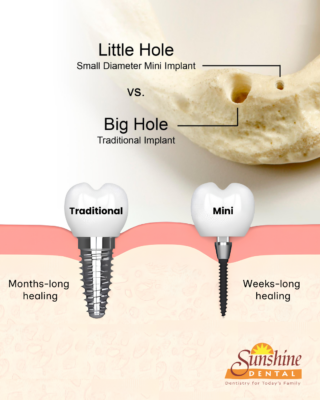
Mini implant placement is often a simpler surgical process, as these narrow posts require only a small entry point. With this approach, we protect more of the natural bone and gum tissue, which helps limit bleeding, swelling, and the chance of infection afterward. Their smaller size also means we can often use the patient’s existing bone without needing a bone graft.
These advantages lead to a noticeably faster and simpler recovery. Mini implants often support same-day temporary teeth, giving patients functional replacements within hours rather than waiting months for healing.
Since the placement process doesn’t involve grafting or a secondary surgery to expose the implant, it requires fewer appointments and less disruption overall. Studies also show that mini implants remain highly dependable over time, with success rates up to 90%. The unified, one-piece design of the mini implant often supports this outcome.
Traditional two-piece implants have a tiny connection point between the implant and abutment. Sometimes, bacteria can accumulate in that tiny space. If that buildup lingers, it can lead to inflammation and bone loss. Mini implants don’t have this connection point, which helps keep the tissues around them healthier as they heal and function.
Choose a Tooth Replacement That Keeps Treatment Simpler
Mini dental implants follow the same idea that guides minimally invasive dentistry: treat the problem without putting the mouth through more than it needs. For more people than ever before, that can mean a shorter recovery, fewer appointments, and a treatment plan that feels easier to follow.
If you have been told you need a bone graft, worry about a longer surgical process, or want a more efficient way to replace missing teeth, mini implant treatment may be worth exploring. Schedule a free consultation with Dr. Jaime to learn how this approach can support your smile with less stress on the structures we want to preserve.