
Dental Crowns in Albuquerque, NM
If you look back at some of the earliest figures people viewed as protectors, the medieval knight usually appears near the top of the list. Every piece of their armor served a specific protective function. Each section followed the contours of the body so it could absorb and spread out the force of a hit. The breastplate shielded the chest and abdomen, while the helmet protected the skull. Working together, these components formed a strong outer barrier over areas that needed support. But this concept isn’t limited to armor or history. In dentistry, dental crowns act as a protective layer for your tooth.
When a tooth becomes worn down, cracked, or weakened, it benefits from a protective cover that allows you to use it normally again. We place a crown over the damaged area so you can bite and chew comfortably and avoid further damage. It works on the same principle as armor: a strong cover that protects what remains and keeps it working comfortably.
How Dental Crowns Protect Your Tooth
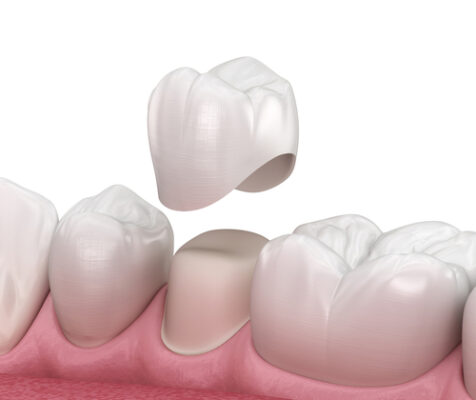
A dental crown is a custom cover that restores the shape and strength of a damaged tooth. Molded to look and work like a natural tooth, it fits over the remaining structure like a thimble on a finger. Once placed, the crown acts as a strong shell, helping the tooth handle daily use.
We use a crown when a tooth cannot be supported with a simpler treatment like a dental filling. Severe fractures, large areas of decay, or broken pieces leave the tooth at risk of further damage. A crown stabilizes what remains by enclosing it in a strong, protective layer. Shaped to meet the opposing teeth, it also restores proper function so you can chew and speak comfortably.
A crown also reinforces a tooth after a root canal. Once the inner tissue is removed, the outer structure becomes more brittle and likely to crack under pressure. Placing a crown over the tooth strengthens the surface and helps prevent future fractures. Crowns also support dental bridges by anchoring the replacement tooth to stable abutments on each side.
Alternatives to Dental Crowns
When a tooth needs repair, a dental crown is not always the immediate answer. If the remaining structure is strong, we can use treatments that reinforce the tooth while preserving more of your natural enamel. These options vary in strength, coverage, and purpose, but each supports the tooth without enclosing it as a crown does.
- Dental fillings: We place a filling when decay or damage is limited to a small area. This treatment removes only the weakened portion of the tooth, then replaces it with a durable material that restores shape and function. You leave the appointment with the tooth stabilized and ready for everyday use.
- Dental bonding: Bonding works for minor chips, worn edges, or small gaps. We apply a tooth-colored resin, shape it to restore the contour of the tooth, and harden it in place. You gain immediate improvement in appearance and function without altering healthy enamel.
- Dental veneers: A veneer can address cosmetic concerns on front teeth, including discoloration and irregular shapes. We reshape a thin layer of enamel before placing a custom-made shell over the front surface. You maintain most of your natural teeth while improving their appearance.
Replacing a Missing Tooth With an Implant-Supported Crown
When a bridge replaces a missing tooth, the crowns that support it must attach to healthy teeth. We shave down that healthy structure to make room for the supporting crowns, so the solution involves more than just the space where the tooth is missing.
As an alternative, Dr. Jaime can place a mini dental implant to support a single crown. This approach replaces the missing tooth directly at the site of the loss. Dr. Jaime makes a small opening through the gums and into the jawbone, then places the implant where the root once sat. As the bone heals, it fuses to the implant, forming a stable base for the crown.
A mini dental implant also functions on its own. It replaces only the missing tooth, which allows the neighboring teeth to remain untouched and continue working normally. Since the implant provides its own support, this treatment option focuses on the single area of tooth loss rather than extending to the surrounding teeth.
Find Out How Dental Crowns Can Protect Your Smile
If a damaged or missing tooth has you rethinking how well your smile functions, we can help you sort through the options. At Sunshine Dental, we carefully assess the tooth’s condition, discuss solutions, and show you how a crown or a mini dental implant can restore stable, everyday comfort. If you want a clearer picture of what your smile needs, contact us to schedule a free consultation.
Frequently Asked Questions
Most dental insurance plans provide some coverage for crowns because they are considered a major restorative treatment. The exact amount varies based on your plan, your provider, and whether the office is in network.
During your free consultation, we can review your benefits, explain what your plan typically covers, and discuss any financing options that may help manage out-of-pocket costs.
Yes, decay can still develop on the natural tooth beneath a crown. The crown protects the tooth, but the underlying structure can still be affected by bacteria if plaque collects along the margins.
Daily brushing and flossing, along with regular professional cleanings and periodic X-rays, help detect early changes and keep the tooth healthy.
Crowns often last about 15 years, but many last 20 years or longer with good care. Longevity depends on the material of the crown, your oral hygiene routine, your bite, and habits like grinding or chewing hard foods.
Regular checkups help ensure the crown stays secure and the tooth underneath remains healthy.