
Root Canal Treatment in Albuquerque, NM
If you have ever traded dental stories with friends or family, chances are at least one of them sounded dramatic enough to make you hesitate before booking an appointment. Conversations about dentistry often rely on exaggerated accounts, half-remembered experiences, or secondhand warnings that grow more convincing each time they are repeated. Over time, these stories can shape how people view dental care as a whole, even when they no longer reflect how modern treatment actually works. Root canal treatment is frequently at the center of that folklore.
Dentists routinely perform root canal therapy to preserve natural teeth. And yet, the treatment remains one of the most misunderstood procedures in dentistry. Reputation tends to move faster than fact, and once a narrative takes hold, it can overshadow the reality behind the treatment. When viewed as it is practiced today, root canal treatment focuses on preserving your natural tooth, not on the dramatic scenarios those stories suggest.
Common Misconceptions About Root Canal Treatment
Does a Root Canal Involve Removing the Tooth Roots?
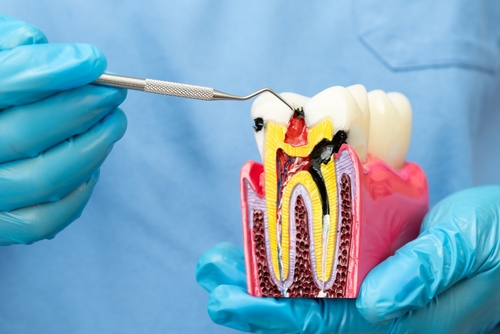
One of the most common myths about root canal treatment is that it involves removing the tooth’s roots. In reality, we never remove the roots during this procedure. Instead, we treat a very specific area inside the tooth, while keeping the structure that holds your tooth in place fully intact.
The crown of a tooth is the visible portion above the gumline. Beneath that surface sits a small inner space called the pulp chamber, which contains the nerves and blood vessels that once helped the tooth develop. From that chamber, narrow channels extend down through the roots and into the jawbone. These channels are called root canals, and they carry the same nerve tissue through the length of the tooth. The roots surrounding these canals serve a different purpose altogether. They anchor the tooth securely in your jaw and allow it to function normally when you bite and chew.
When we perform a root canal, we access the inside of the tooth through a small opening in the crown. We remove the inflamed or infected pulp from the pulp chamber and the root canals, then carefully clean and disinfect that space. The roots remain exactly where they are, continuing to support the tooth.
Think of a pencil. The wooden body represents the tooth and its roots. The graphite core running through the center represents the pulp and root canals. A root canal removes and replaces the graphite, not the wood. Your tooth stays firmly in place, supported by its roots, while the source of the problem inside is resolved.
Is It Better To Extract a Tooth Instead?
Another common misconception suggests that removing a tooth offers a better solution than saving it. In practice, dentists approach treatment with a very different mindset. We always aim to preserve your natural teeth whenever possible, because nothing functions quite like the tooth you were born with. Maintaining your own teeth supports long-term oral health, stability, and balance throughout your smile.
Root canal therapy aligns directly with that philosophy. By addressing a more localized issue, we allow the tooth to continue doing its job rather than replacing it.
Extraction enters the conversation only when saving the tooth is no longer realistic. In some cases, damage extends well beyond what a root canal can resolve. Deep fractures below the gumline or extensive decay can leave too little healthy structure to properly seal the tooth or support a dental crown. When a tooth cannot remain stable or predictable after treatment, removing it is often the best option.
Are Root Canal Treatments Painful?
The idea that root canal treatment causes discomfort grew out of a time when anesthesia options were limited and dental tools lacked today’s level of precision. Modern dentistry no longer resembles those early experiences, yet the reputation has lingered.
The discomfort many people associate with root canal treatment usually comes from the infection or inflammation inside the tooth. That irritation is what sends you to the dentist in the first place. Our goal with a root canal is to remove that source and allow the tooth to heal.
Before Dr. Jaime begins, she thoroughly numbs the area with a local anesthetic, much like she would do for a routine filling. Once the tooth is fully anesthetized, she can access the inside, clean the affected tissue, and seal the canals without you feeling the procedure itself. Most patients describe the experience as far more manageable than they expected.
What Are My Next Steps if I Need an Extraction?
If extraction is necessary, Dr. Jaime will walk you through the process so you know exactly what to expect. She will gently loosen the tooth using specialized instruments and remove it from the socket with care. Afterward, she thoroughly cleans and disinfects the area to support proper healing. Once the extraction site has healed, we can proceed with tooth replacement. Allowing the area to recover helps ensure the surrounding bone and tissue can properly support a new tooth.
Replacing a missing tooth sooner rather than later matters. When a space remains open, nearby teeth gradually move toward it, which can disrupt alignment and alter how your bite comes together over time. Mini dental implants are one of the most effective ways to prevent these issues.
Rather than resting on neighboring teeth, a mini dental implant replaces the tooth root. Dr. Jaime places the implant by creating a small pilot opening through the gum and into the bone. Then, she secures the implant into position. Since the implant functions like a natural root, it provides strong support for a crown or bridge. They effectively prevent crowding, bite changes, and uneven wear, while giving your smile the support it needs to stay healthy.
Relieve Tooth Pain With Root Canal Treatment
If you are experiencing symptoms or have been told you may need a root canal, a professional evaluation is the next step. Dr. Jaime will carefully assess the tooth, explain our findings, and discuss appropriate treatment options based on your needs. The goal is to help you understand what is happening and what makes the most sense for your oral health. Contact Sunshine Dental today to schedule a free consultation.
Frequently Asked Questions
Many people notice mild tenderness for a short period after treatment, which is easily managed with over-the-counter pain relievers. Within a few days, that sensitivity typically fades, and normal eating and daily activities resume. Most patients feel fully comfortable within about a week, and follow-up visits help confirm that healing is on track.
Research shows that root canal treatment has a low failure rate. About 97% of treated teeth remain in place for roughly 10 years after the procedure, and many last close to 20 years when properly sealed with a filling or crown. This means that only a small percentage of root canal–treated teeth fail over time.
When problems do occur, they are usually related to reinfection, fractures, or delays in placing a final restoration, rather than the root canal treatment itself.
Most of the discomfort people associate with a root canal comes from the infection or inflammation inside the tooth before treatment begins. Modern local anesthesia makes the procedure comparable to a routine filling, so patients typically feel pressure rather than pain.