Oral Surgery in Albuquerque, NM
Oral surgery may become part of your dental care at some point. That idea can feel intimidating at first, but it is not a verdict or setback. In most cases, your oral health needs stronger support than routine treatment can provide. Oral surgery addresses problems at their source. By working with the jawbone, gums, and surrounding tissues, we can correct conditions that would otherwise cause discomfort, limit function, or interfere with future care. Instead of just handling symptoms, oral surgery helps create a healthier foundation for everything that comes next.
When Oral Surgery Becomes Part of Your Care
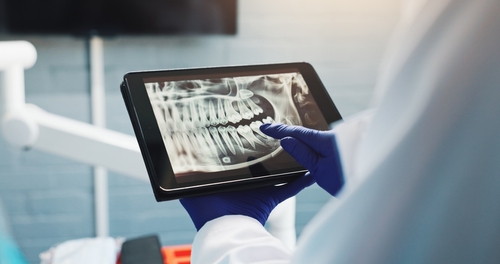
Oral surgery is often considered when a dental concern cannot be resolved with routine care alone. In simple terms, oral surgery refers to procedures performed in and around the mouth and jaw to diagnose, treat, or correct conditions affecting deeper oral structures. These are situations where the issue is not limited to the tooth surface or gum line but involves the jawbone, surrounding tissue, or areas calling for more direct access to resolve the problem properly.
Oral surgery allows us to evaluate and treat those deeper areas when pain, infection, dysfunction, or structural changes are present.
Common Treatments That Fall Under Oral Surgery
Gum & Soft Tissue Procedures
When excess, diseased, or restrictive tissue interferes with health, function, or appearance, we use targeted soft tissue procedures to restore balance and support healing.
A gingivectomy removes diseased or overgrown gum tissue. We often recommend it when gum disease causes the gums to pull away from the teeth. That gap forms deep pockets where bacteria collect and where routine brushing and flossing cannot reach. These pockets allow infection to persist and make daily oral care more difficult. By removing the affected gum tissue, we reduce pocket depth, limit bacterial buildup, and support healthier gums around each tooth.
In cases where excess gum tissue makes teeth look shorter or uneven, a gingivectomy can also reshape the gumline to create a more balanced appearance.
A frenectomy releases a tight frenum, the small band of tissue connecting the lips or tongue to the gums, when it restricts movement or affects oral health. Using laser technology lets us perform this procedure in a controlled way, minimizing bleeding and supporting faster healing.
Tooth Extraction
Tooth extractions typically fall into two categories: simple and surgical.
We perform a simple extraction when the tooth is fully visible and stable above the gums. After numbing the area, we loosen the tooth from its socket. The process is straightforward, does not require incisions or stitches, and usually takes only a short amount of time.
Surgical extraction is often necessary when access is limited. You may need this type of extraction if the tooth remains impacted beneath the gums, has broken at the gum line, or has roots that make standard removal difficult. In these cases, we open the gum tissue to access the tooth. When needed, we remove a small amount of bone to safely free the tooth. Our focus is on removing the tooth while protecting the surrounding structures that support healing and future treatment.
During many extractions, we use advanced technology such as the Piezotome Cube. This device uses gentle ultrasonic vibrations to work on bone while leaving nearby soft tissue untouched. It focuses only on hard tissue, allowing us to remove teeth without forceful rocking motions. As a result, we place less stress on the gums, nerves, and blood vessels, helping keep the area more stable during the procedure.
Bone Grafting and Alveoplasty
Many people benefit from dental implants to replace missing teeth and restore function. Implants rely on the jawbone for support, so the bone under the surface is just as important as the replacement tooth. When the jawbone cannot provide that support, we need to address the foundation before implant treatment can move forward.
Multiple causes can limit the jaw’s ability to hold a dental implant securely. Bone loss can occur after long-term tooth loss, as the jaw no longer receives the stimulation it needs to stay strong. Periodontal disease can also weaken the bone that supports the teeth. In these cases, placing an implant without preparation would compromise stability and long-term success.
Bone grafting strengthens areas where bone volume or density is insufficient. We place graft material onto existing bone, allowing your natural bone to grow into it over time and reinforce the area.
In some cases, we also perform alveoplasty, a bone contouring procedure that reshapes and smooths the jawbone ridge. During an alveoplasty, we remove sharp edges, uneven contours, or excess bone, often after tooth extractions or before denture or implant placement. By creating a smooth surface, this procedure supports healing and improves the fit and stability of dental prosthetics.
Mini Dental Implants
When we talk about replacing missing teeth, several options usually come up first. Traditional dentures and dental bridges have helped many people restore appearance and function, but these solutions rely on the gums or nearby teeth for support.
Mini dental implants bring a new approach. Instead of resting on the gums or neighboring teeth, they anchor directly into the jawbone, much like the root of a natural tooth. A mini dental implant is a small titanium post that we place into the bone to support a crown, bridge, or denture. After placement, the surrounding bone bonds with the implant, creating a solid connection that the body recognizes and integrates. From that point on, the implant serves as a strong, reliable support for tooth replacement.
Mini dental implants are a form of oral surgery, but the placement process is typically less involved than traditional implant procedures. In many cases, Dr. Jaime creates a small pilot opening through the gums and into the jawbone, then places the implant directly. This approach limits the need for larger incisions or extra surgical steps, allowing us to focus on implant placement while preserving surrounding tissue.
Let’s Review Your Oral Surgery Options
When oral surgery is recommended, it’s with a clear purpose: to improve your oral health now and reduce the risk of bigger problems later. Oral surgery gives us the ability to correct more extensive structural issues that routine dental care cannot. By treating concerns within the jawbone and surrounding tissues, these procedures help restore stability, protect long-term function, and create a strong foundation for future treatment.
If you’ve been told you might need oral surgery, schedule a free consultation at Sunshine Dental to explore your options and find out what’s right for you.
Frequently Asked Questions
The cost of oral surgery depends on the type of procedure and the level of care involved. Some treatments, such as a straightforward tooth extraction, require less time and fewer steps. Others may involve additional procedures, such as bone grafting or soft tissue management, before surgery can safely proceed. As procedures become more complex, surgical time and post-operative care needs increase, which affects overall cost.
During your free consultation, we evaluate your oral health, review imaging, and discuss your treatment goals. From there, we provide a personalized treatment plan with estimated costs. We’ll also review insurance benefits and discuss financing options. You will know what to expect before treatment begins.
Most oral surgery procedures do not require you to be put to sleep. In many cases, we use local anesthesia to numb the treatment area so you remain comfortable throughout the procedure. This approach allows for effective pain control while avoiding deeper forms of sedation.
Dr. Jaime takes a calm, attentive approach to care and keeps you informed at each step. She listens closely to your concerns, explains what to expect, and adjusts treatment as needed to support your comfort.
Gum healing time varies based on the type of oral surgery performed and your individual healing response. Initial healing typically occurs within one to two weeks, as swelling decreases and the gum tissue begins to close. During this phase, the area may still feel sensitive, but daily activities usually become easier.
Complete soft tissue healing takes longer and can continue for several weeks or months, especially after more involved procedures. We monitor healing closely throughout recovery. We also provide clear post-operative instructions to support each stage of healing and reduce the risk of complications.