Dental Veneers in Albuquerque, NM
You have probably looked around a familiar space and noticed small details that no longer feel quite right. A wall that could use a fresh coat of paint. A surface that would look better with a bit of polish. Nothing structurally wrong, just areas where wear, discoloration, or age has started to show. Often, the solution is not a full overhaul but a thoughtful refinement that restores balance and brings everything back into focus. Dental veneers follow that same principle of refinement.
Veneers focus on what you see when you smile, even if your teeth are otherwise healthy. Small differences in color, shape, or spacing can stand out over time. These details are often minor, but they can make a smile feel uneven or unfinished. Veneers help smooth out those imperfections. For many people, it becomes the treatment that addresses several cosmetic concerns in one clear solution.
Dental Veneers vs. Lumineers: How Are They Different?
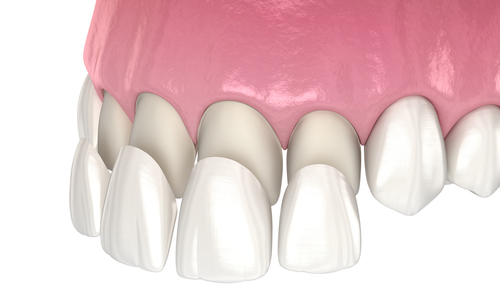
We provide both dental veneers and Lumineers to address cosmetic concerns with different levels of preparation and flexibility. Both treatments act as cosmetic coverings that improve the appearance of the teeth by addressing surface-level concerns while preserving the natural tooth structure underneath. We use high-quality materials that closely resemble natural enamel.
In both cases, veneers and Lumineers treat concerns such as discoloration, small chips, minor gaps, and subtle alignment issues by covering the visible surface of the teeth, while requiring less preparation than treatments like dental crowns.
Dental veneers are slightly thicker, which allows for more comprehensive reshaping. To create space for them, Dr. Jaime typically removes a very thin layer of enamel. That step is permanent, but it supports a strong bond and allows veneers to address more noticeable concerns. These can include deeper discoloration, larger gaps, and more uneven tooth contours.
Lumineers are much thinner, similar in feel to contact lenses. In many cases, that thin profile allows placement with little to no enamel reduction. As a result, the process often feels more conservative and, in some situations, may be reversible. The tradeoff is flexibility. Because Lumineers are so thin, they work best for mild cosmetic concerns and may not fully cover darker stains or allow for significant changes in tooth shape.
However, for some patients, a more limited approach may be appropriate. In those cases, we may also discuss dental bonding. We apply a moldable resin directly in the office to perform dental bonding and make small, targeted improvements. Bonding works well for minor chips, slight gaps, or surface stains on one or two teeth, especially when you want a quicker, more conservative option that does not involve enamel removal.
Dental Veneers: Understanding the Treatment Process
Step 1: Consultation and Planning
We begin with a detailed consultation to understand what you would like to change and what your teeth need to stay healthy. Dr. Jaime examines your teeth and gums, reviews your bite, and takes CBCT scans when appropriate to fully evaluate your smile. She uses this information to assess tooth structure, spacing, and enamel thickness, all of which guide treatment planning.
From there, we talk through which cosmetic option makes the most sense for you, including dental veneers or Lumineers. Once a direction is clear, Dr. Jaime plans the shape, size, and shade of your treatment so the final result looks natural and functions comfortably.
If we find cavities, gum concerns, or other issues, we address those first. Veneers work best on healthy teeth, and careful planning helps prevent future problems with sensitivity, fit, or bite balance.
Step 2: Tooth Preparation and Impressions
Once the plan is set, Dr. Jaime prepares the teeth by gently removing a very thin layer of enamel from the front surface. This step creates space so the veneers sit flush and do not feel bulky. After preparation, we take detailed impressions or digital scans of your teeth. We send these to a dental laboratory, where your veneers are crafted to precisely match your smile and bite. For some patients, a more limited approach may be appropriate. In those cases, we may also discuss dental bonding.
While the lab creates your final veneers, we place temporary coverings to protect your teeth and maintain your appearance. These temporaries help shield sensitive areas and give you a preview of how your smile will look. During this time, you can also let us know if anything feels off, allowing Dr. Jaime to make adjustments before the final placement.
Step 3: Final Placement and Follow-Up
When your veneers return from the lab, we carefully check their fit, color, and shape. Dr. Jaime places each veneer, bonds it securely to the tooth, and makes final bite adjustments so everything feels natural. After placement, we schedule a follow-up to confirm that your veneers have settled comfortably. We also walk through daily care and habits that help support the long-term performance of your veneers.
Explore Your Options for Dental Veneers
Dental veneers and Lumineers can improve the appearance of your smile by addressing surface-level concerns such as discoloration, uneven shape, or minor spacing, while preserving much of your natural tooth structure. The right option depends on how much change you want and how your teeth respond to treatment!
If you would like to understand which approach fits your smile, what level of preparation is involved, and what results are realistic for you, the next step is a professional evaluation. Contact Sunshine Dental in Albuquerque to book a free consultation.
Frequently Asked Questions
Most dentists classify veneers as a cosmetic treatment. Veneers focus on improving the appearance of the teeth by covering concerns such as discoloration, small chips, gaps, or uneven shape on teeth that are otherwise healthy. They do not restore tooth structure lost to decay, fracture, or disease.
Restorative treatments, such as fillings, crowns, and bridges, rebuild or replace damaged tooth structure to restore function and strength. Veneers cover the surface of the enamel to improve appearance, rather than repairing structural loss.
Porcelain veneers offer a highly lifelike appearance because they reflect and transmit light in a way that closely resembles natural enamel. They also resist staining and maintain their finish over time, which makes them a strong option for visible teeth or broader cosmetic changes. Porcelain veneers require lab fabrication and involve a more permanent commitment, but they provide long-term consistency in color and shape.
Composite veneers use a moldable resin that we apply directly in the office. This allows for faster placement and easier adjustments, which can be helpful for small, localized changes or single-tooth corrections.
Composite veneers tend to wear and discolor more quickly than porcelain and may require touch-ups over time.
Veneers themselves do not decay, but the teeth underneath them can still develop cavities. Decay most often forms along the gumline or around the edges of the veneer if plaque builds up over time. Areas of the tooth that are not covered by the veneer remain vulnerable to bacteria if brushing and flossing are inconsistent.
Good oral hygiene is essential for long-term success. Daily brushing, regular flossing, and routine professional cleanings help protect the natural tooth structure and maintain the seal between the veneer and the tooth.