
Last Updated on January 19, 2026 by Dr. Lilian Jaime
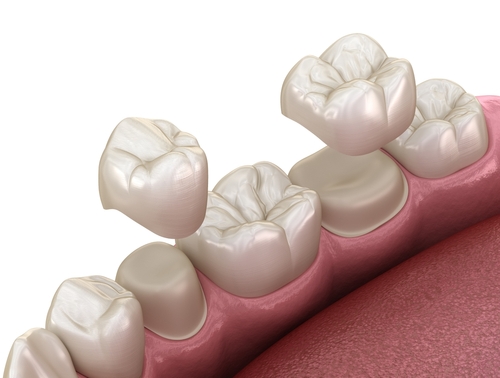
When a significant portion of a tooth has been lost due to decay or injury and is still worth saving, a crown may be in your best interest. A crown fortifies and restores damaged teeth, allowing them to function and look like natural teeth.
When a tooth is beyond repair or is missing completely, a dental implant with a crown is widely considered the best solution. The next best thing is often a three-unit fixed bridge, which uses your natural teeth on either side of the gap. Longer bridges can span larger gaps.
Crowns and bridges are made by a dental technician who uses the mold of your teeth to determine the exact shape and size of the restoration. The process usually takes only a few weeks to complete, helping you look your best with your new smile.
The longevity of a crown or bridge depends primarily on the patient’s dental health and hygiene habits. Routine exams and cleanings, along with regular brushing and flossing, will help keep your smile looking great for years to come.
A crown or bridge can help in many different scenarios. Here are a few that may apply to your case:
- A crown can cover and secure a cracked or chipped tooth.
- A darkened or discolored tooth that doesn’t respond to whitening treatments will look bright, smooth, and polished after a crown is added.
- A dental bridge will fill the space left by lost or extracted teeth.
- A crown will shore up a tooth that is vulnerable after root canal therapy.